- Things to see
- Greece Deluxe
Knossos, located on the island of Crete, is one of Greece’s most iconic archaeological sites. This vast palace complex was once the heart of the Minoan civilization, one of the first advanced cultures in Europe. Its ruins offer a glimpse into the wealth, art, and culture of the ancient world. As you explore Knossos, it becomes clear why it is such a significant destination for history lovers.
The palace is also closely tied to Greek mythology, which only adds to its allure. Over the years, Knossos has become a symbol of Crete’s rich cultural heritage. Many visitors come to see the remnants of this once-thriving civilization. The site stands as a testament to the Minoans’ architectural skills and artistic achievements.
The Historical Significance of Knossos
Knossos was the largest Minoan palace, built around 1900 BCE and expanded around 1700 BCE. The palace served as the center of Minoan life, both politically and economically. It was also the residence of King Minos, a legendary figure in Greek mythology. Minos is said to have ordered the construction of the labyrinth to house the Minotaur, a creature that was half-man, half-bull.
Archaeological evidence indicates that Knossos was a bustling hub for trade and administration. It housed storage rooms, workshops, and religious spaces. These rooms show how advanced the Minoan society was. They had a well-organized economy, including a complex system of record-keeping and trade relations. The palace itself served as both a political center and a cultural symbol.
The Architecture of Knossos
Knossos boasts remarkable architecture, which is still awe-inspiring to this day. The palace spans over 20,000 square meters and consists of multiple levels. Its layout is labyrinthine, with winding hallways and large courtyards. The central courtyard, in particular, stands out as a significant feature. It was used for public ceremonies and gatherings.
The rooms surrounding the courtyard include grand halls and smaller chambers. Some have been restored to reveal intricate frescoes. These frescoes depict scenes from everyday life, nature, and religious rituals. The palace also had advanced features, including a sophisticated drainage system and early plumbing. These innovations were extraordinary for their time.
The Art and Frescoes of Knossos
The frescoes at Knossos are perhaps the most stunning feature of the site. These colorful murals cover the walls of many rooms. They depict everything from religious ceremonies to scenes of nature and daily life. The Minoans had a deep appreciation for art and it is evident in these lively, detailed works.
Among the most famous frescoes is the “Fresco of the Queen’s Megaron.” This painting shows a woman surrounded by lilies. It is often considered an emblem of the Minoan connection to nature and fertility. Other frescoes show dolphins, birds, and scenes of athletic competition. These murals give us a glimpse into the vibrant culture of the Minoans.
The Archaeological Discoveries at Knossos
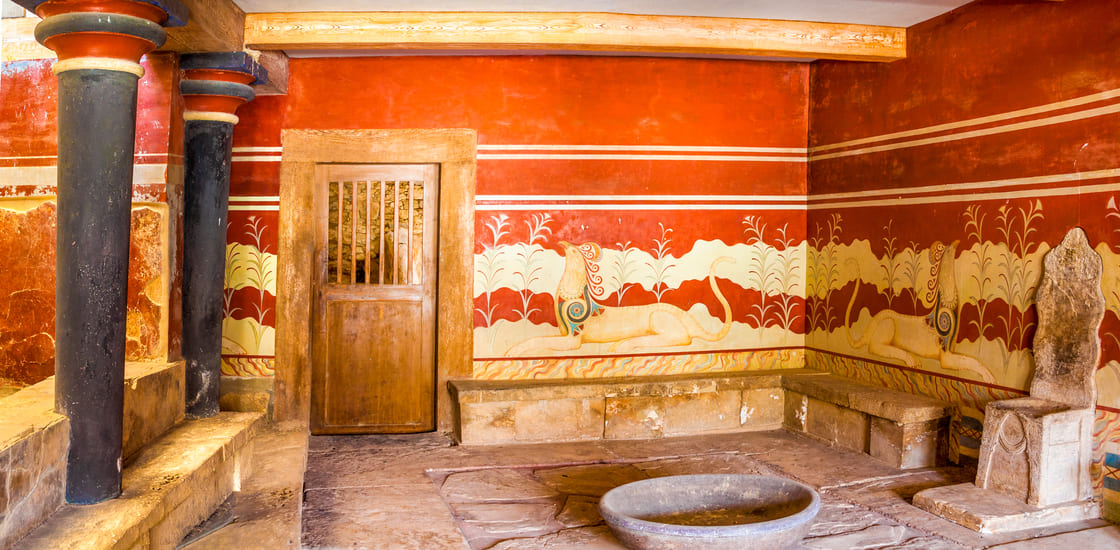
The discovery of Knossos was a significant event in archaeology. British archaeologist Sir Arthur Evans led the excavations in the early 20th century. His work uncovered key features of the palace, including the throne room, the grand staircase, and many frescoes. Evans’s findings confirmed the importance of Knossos in Minoan history.
Today, Knossos remains one of the most important archaeological sites in Greece. Visitors come from all over the world to see the ruins. They can explore the palace and its surrounding areas, learning about the Minoan civilization. The site offers a rare opportunity to connect with the ancient past.
Mythology and Legend of Knossos
Knossos is also steeped in Greek mythology, adding an extra layer of intrigue. According to legend, King Minos of Crete was the ruler who commissioned the construction of the labyrinth. This maze-like structure was said to house the Minotaur, a terrifying creature. The hero Theseus is said to have defeated the Minotaur, aided by the princess Ariadne.
Other myths surround the palace, including those about Daedalus, the master craftsman who allegedly designed the labyrinth. These stories have been passed down through generations, contributing to the mystique of Knossos. Whether based in fact or legend, these tales continue to capture the imagination of visitors.
Visiting Knossos Today
Knossos is a must-see destination for anyone visiting Crete. The site is located near Heraklion, the island’s largest city. It is easy to reach and well-maintained, making it a popular attraction for tourists. Visitors can explore the ruins at their own pace and marvel at the ancient architecture.
In addition to the ruins, there is a museum nearby that displays artifacts from the site. This museum helps to contextualize the finds and provides a deeper understanding of the Minoan civilization. For history buffs, the museum is an essential stop before or after visiting the palace.
Conclusion
Knossos is a treasure trove of history, art, and mythology. It is the largest and most significant Minoan palace, offering insight into one of Europe’s oldest civilizations. The palace’s architecture, frescoes, and connection to ancient myths make it a unique and fascinating destination. A visit to Knossos allows you to step back in time and experience the glory of the Minoan civilization.
Whether you are interested in history, art, or mythology, Knossos has something for everyone. It’s a place where the ancient world comes to life. For anyone traveling to Crete, a visit to Knossos is an absolute must.