- Landmark
- Greece Deluxe
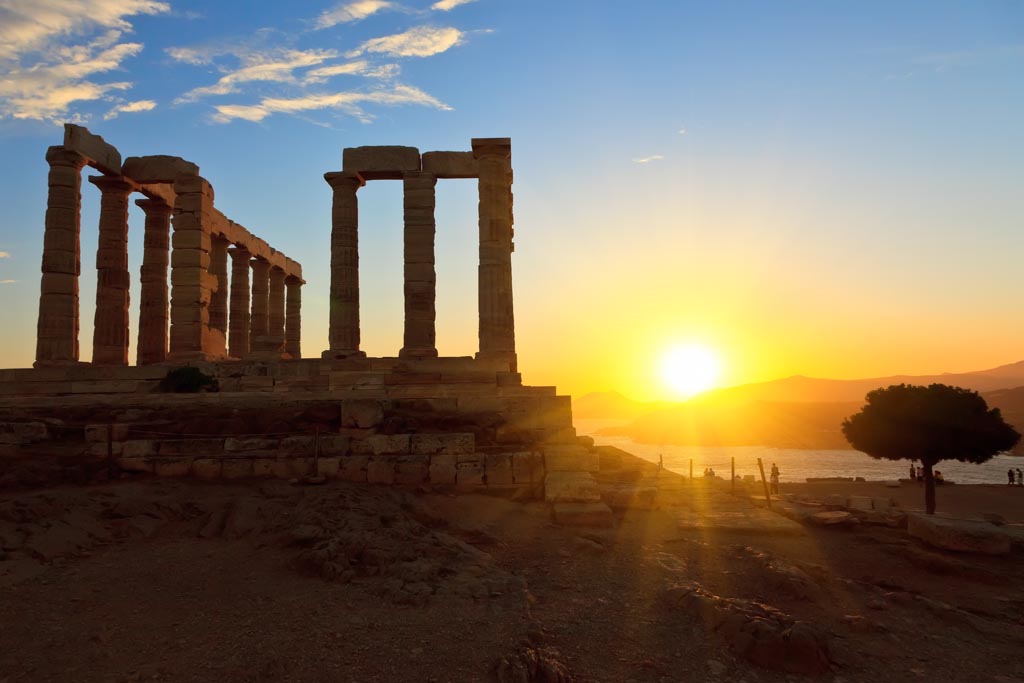
The Temple of Poseidon stands proudly at Cape Sounion, overlooking the Aegean Sea. This ancient temple, dedicated to Poseidon, the god of the sea, is one of the most iconic landmarks in Greece. The temple is situated on a cliff, offering breathtaking views of the sea and surrounding landscape. It was built in the 5th century BCE, during the Golden Age of Athens, and remains an enduring symbol of ancient Greek culture and religion. Today, the Temple of Poseidon is a popular tourist destination, attracting visitors from around the world.
A Glimpse into the Temple’s History
The Temple of Poseidon was constructed between 444 and 440 BCE, under the direction of the Athenian statesman Pericles. It was built to honor Poseidon, who was believed to protect sailors and ensure their safe travels across the sea. The temple was originally made of marble, and its design follows the classic Doric order, featuring six columns at the front and back, and thirteen on the sides. While much of the temple has been damaged over time, its iconic columns still stand tall, making it a testament to the skill and vision of ancient Greek architects.
The Architecture of the Temple
The architecture of the Temple of Poseidon is a prime example of the Doric style, characterized by simple yet powerful design. The temple’s columns are made of local marble and are arranged in a rectangular shape. The front of the temple is dominated by six grand columns, while the side columns are spaced further apart, creating a sense of balance and symmetry. The temple’s design emphasizes the harmony between the structure and the natural surroundings, highlighting the Greeks’ deep respect for nature and the gods.
The Significance of the Temple in Ancient Greece
In ancient Greece, the Temple of Poseidon was not just a religious site, but also a place of great cultural and political significance. It was closely associated with the city-state of Athens, which relied heavily on its navy for defense and trade. Poseidon, as the god of the sea, was believed to protect the Athenians and ensure their success at sea. Sailors would often stop at the temple to offer prayers and sacrifices before embarking on long journeys. The temple also played a role in the spiritual life of the region, as it was part of a network of religious sites dedicated to various gods and goddesses.
The Ruins of the Temple: A Glimpse into the Past
Today, the Temple of Poseidon is mostly in ruins, but much of its grandeur can still be appreciated. The site is famous for its six standing columns, which have survived centuries of erosion and damage. These columns are often photographed against the backdrop of the setting sun, creating a striking image that has become one of Greece’s most recognizable landmarks. Visitors to the site can walk among the ruins and imagine what the temple must have looked like in its prime. The view from the temple is equally stunning, with the Aegean Sea stretching out as far as the eye can see.
The Temple’s Role in Greek Mythology
In Greek mythology, Poseidon was one of the twelve Olympian gods and was revered as the god of the sea, earthquakes, and horses. He was often depicted holding a trident, symbolizing his power over the waters. The Temple of Poseidon served as a place where the people of ancient Greece could honor him and seek his protection. Mythology tells of Poseidon’s involvement in many famous stories, including the Trojan War, where he sided with the Greeks, and his rivalry with Athena for the patronage of Athens. The temple stood as a reminder of Poseidon’s power and influence over both the sea and the lives of those who depended on it.
Visiting the Temple of Poseidon
Visiting the Temple of Poseidon is an unforgettable experience. The temple is located about 70 kilometers southeast of Athens, making it a popular day trip for tourists. The site is easily accessible by car, and there are also organized tours available from Athens. The temple is best visited during the late afternoon, when the sunlight casts a golden glow on the columns and the surrounding sea. A visit to the temple offers a chance to step back in time and connect with the ancient Greek world. The view of the Aegean Sea from the temple is nothing short of spectacular, making it one of the most picturesque spots in Greece.
The Temple’s Preservation and Ongoing Excavations
The Temple of Poseidon is an important archaeological site, and ongoing efforts are being made to preserve and protect it. Over the years, the temple has undergone various restoration projects, including the reconstruction of several columns and the stabilization of the remaining structures. Archaeologists continue to excavate the site, uncovering new artifacts and shedding light on its history. The site is carefully maintained by the Greek Ministry of Culture, ensuring that future generations can experience the beauty and significance of this ancient landmark.
Conclusion: A Monument to Greece’s Rich Heritage
The Temple of Poseidon is more than just a ruin; it is a monument to Greece’s rich cultural and religious heritage. Its stunning location, impressive architecture, and deep ties to Greek mythology make it one of the country’s most important historical sites. A visit to the temple is a journey through time, offering a glimpse into the ancient world and the beliefs that shaped it. Whether you are a history enthusiast, a lover of architecture, or simply someone who appreciates breathtaking views, the Temple of Poseidon is a must-see destination on any trip to Greece.